Toyota Takes One-Third Stake in Cellcentric as Hydrogen Truck Push Expands Across Europe
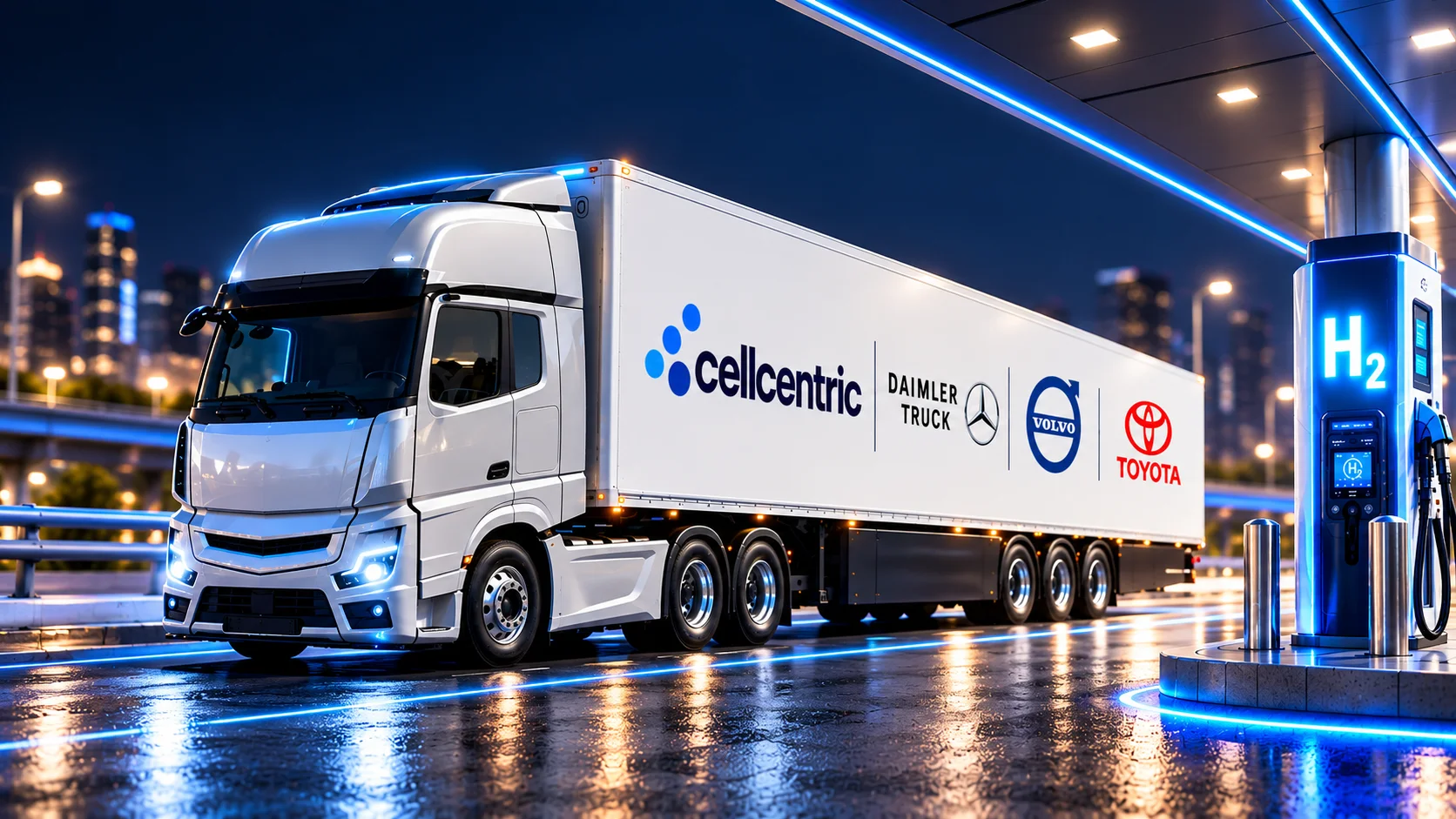
Toyota Motor Corporation is about to become an equal one-third shareholder in Cellcentric, joining Daimler Truck and Volvo Group in a major push to strengthen hydrogen fuel-cell technology for heavy commercial vehicles in Europe. The agreement brings Toyota’s three decades of fuel-cell development experience into the joint venture as the partners work to expand hydrogen-powered freight transport.
Cellcentric, a company established jointly by Daimler Truck and Volvo Group in 2021. It manufactures fuel-cell systems for heavy-duty applications. The new agreement brought the companies jointly focusing on the development, production and commercialization of hydrogen fuel-cell systems , with Toyota contributing its fuel-cell technology and financial resources.
European truck manufacturers' increasing investment in hydrogen technology for long-distance and high-payload operations created the plot of this agreement. Daimler Truck plans to place a pre-series fleet of 100 next-generation Mercedes-Benz fuel-cell trucks by end of 2026. The company says the trucks can achieve more than 1,000km on a single fill of liquid hydrogen.
Volvo Group is testing hydrogen-powered trucks, with Cellcentric technology enabling ranges of up to 1,000km, also separately developing hydrogen-combustion engines for its heavy-duty vehicles.
The companies are also targeting the wider hydrogen ecosystem. At IAA Transportation, Toyota, Daimler Truck, Volvo Group and other industry partners announced Germany will be considered as a foundation for large-scale hydrogen truck deployment by 2030, covering hydrogen production, refueling infrastructure and vehicle deployment.
Toyota is already expanding its role in commercial hydrogen mobility through partnerships with companies including IVECO and Scania, adding to its growing presence in the heavy-vehicle fuel-cell sector.